


20 years through the eyes of our employees
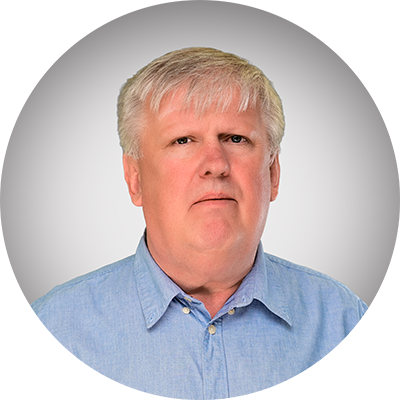 |
Ing. Miroslav Klč |
Ing. Miroslav Klč has dedicated his professional career to nuclear energy—from the earliest days in operation to his current role as a specialist in managing the dismantling of equipment and the demolition of structures in the main reactor building. For more than three decades, he has been both a witness to and an active participant in key moments—from the stable power generation of the units to their gradual decommissioning. Today, he is among those who are transforming the end of one era into a safe and responsible new beginning.
Do you remember your first day on the job?
I remember it, even though it wasn’t exactly a single specific day. First, I had an interview, then psychological tests, since I was applying for an operator position. I started working at Slovenské elektrárne on 15 September 1992—I remember that date exactly. At first, I worked as a primary circuit technician, because training for the operator position didn’t start until later. After eight months, I moved on to training as a secondary circuit operator at the Education and Training Centre in Trnava. After completing the training, internship, and state exams, I became a secondary circuit operator at Unit 2 of the V1 nuclear power plant. It was a huge challenge, but also a sense of responsibility that I felt from day one.
How did your career develop from there?
I worked as a secondary circuit operator for four years. I then moved on to training for the position of primary circuit operator, a role I held for two years. In 1999, I was promoted to head of the operations department. It was a large team, with about 120 people working in shifts. Later, I moved to the asset management department, where I led a smaller team of technicians. The responsibility was just as great—ensuring that we operated the equipment safely, prepared for outages, and prevented breakdowns. Each of these stages was different, and each taught me something.
How do you remember the period when JAVYS was founded?
It was a major turning point. We went from being part of a large corporation to becoming a smaller, independent company. Both our operations and our responsibilities changed. Some things were no longer as straightforward as they had been before. For example, in the area of maintenance, we had to rely on the central maintenance department, which remained at Slovenské elektrárne. It wasn’t always easy, but we gradually built our own system and forged our own path.
How did you perceive the decision to decommission the units?
It was a period full of mixed feelings. On the one hand, we were sad—the units were in excellent condition after the reconstruction, and we knew all the work that had gone into them. On the other hand, we realised that our task was to ensure their safe end of operation and decommissioning. That was the priority. It also helped that management communicated openly and stabilisation measures were adopted to prevent people from leaving. Thanks in part to that, we managed to keep the team together and handle this period professionally.
Which moment or project do you remember most?
The projects involving the dismantling of large technological units have stuck in my memory, such as secondary circuit equipment—including turbines and their accessories—and especially the dismantling of large-scale primary circuit components: reactors, steam generators, pressurisers, reactor coolant pumps, loop isolating valves, and main coolant pipes. It was a demanding process from both an organisational and logistical standpoint, but we handled it very well.
At the same time, I realise that I’ve had the opportunity to experience the entire life cycle of a nuclear facility—from operation to decommissioning. That’s an experience not many people have.
How do you perceive the responsibility of your work?
I’ve always felt it very strongly. Work in the nuclear energy sector is unique in that safety is the absolute priority. But even today, as facilities are being decommissioned, the responsibility remains the same. Every step must be well-thought-out, coordinated, and correct. It’s something you carry within you and take for granted.
What has kept you with the company for more than three decades?
Technology and my relationship with it. I’ve always been close to technology, and this work fulfilled me. The work of an operator was exceptional for me. It’s similar to being a pilot—it requires concentration, responsibility, and experience. Once you go through that, it stays with you. The long-standing relationships built with colleagues are also irreplaceable.
Were there moments when you considered leaving?
Yes, especially during the period when the structure was changing after the units were shut down and some positions were being eliminated. At that time, I decided to leave and began making arrangements to leave. In the end, however, I changed my mind. It wasn’t an easy decision—I remember having very mixed feelings about it. Today, though, I’m glad I stayed. It was the right decision.
Has your work influenced you personally?
Definitely. Especially in terms of my approach to responsibility and discipline. There is a strong emphasis on safety and on what is known as the “operational culture”—that is, ensuring that everyone knows what they are doing and why they are doing it. This approach naturally carries over into one’s personal life.
Is there anything from the past that you would carry over to today?
Perhaps greater continuity. Back then, people went through all the ranks—from the basics all the way up to higher positions. That built experience and respect for the work. Today, things move faster, but I still think those fundamentals are of great value. On the other hand, there are many talented young people who bring new energy and perspectives.
Where do you think the company will be in ten years?
I believe it will continue to excel in what it does best—decommissioning nuclear installations, treating, conditioning and disposing of radioactive waste, and storing spent fuel. At the same time, it will also get involved in new projects, such as the construction of nuclear installations. It would be an honour for me to witness the start of construction of a new nuclear power plant.
What advice would you give to new colleagues?
They should appreciate this job and the opportunity they have. It’s not something to be taken for granted. It’s important to be responsible, to work together, to ask questions, and to learn. The experience they gain here is invaluable.
How would you sum up your time here in a single thought?
I’m proud of how the company has evolved and where it has gone. And most importantly, everything we do must be safe. That’s the foundation—for us, for our work, and for our families.