


20 years through the eyes of our employees
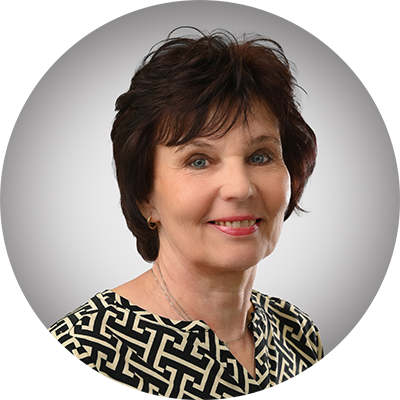 |
Eva Chnapková |
When Eva Chnapková started working at the nuclear power plant in Jaslovské Bohunice after graduating from a secondary technical school specialising in chemistry, she probably had no idea that it would turn into a career spanning four decades. Today, she sums up her career simply—in one word: satisfaction.
Do you still remember your first day on the job?
I’ve been at this workplace for forty years now. It was my first job after school, and I hope it will be my last. I started at the V1 nuclear power plant in the chemistry department in 1985, right after graduating from a secondary technical school specialising in chemistry.
After maternity leave, in 1992, I moved to the bituminisation line, where I continued to work in chemistry. Later, in 2004, I transferred within the chemistry department to Building 47, where I still work today.
In 2006, the company JAVYS was established. How did you perceive this change?
On 1 April 2006, we were transferred from Slovenské elektrárne to the newly established company JAVYS. I didn’t feel any major change in my job. We continued with our routine work; it was more administrative matters that changed—document names, regulations, or labels.
When did you realise you were working on something truly important?
Gradually, as operations of JAVYS began to ramp up in full swing. In addition to operating the V1 power plant, preparations were under way for its shutdown, and the process of decommissioning of nuclear installations began. This also includes the treatment, conditioning, and disposal of radioactive waste, as well as management of spent nuclear fuel.
The company also operates the National Radioactive Waste Repository in Mochovce and ensures the safe management of radioactive materials of unknown origin.
My work hasn’t changed fundamentally, but the instrumentation has improved significantly over the years. More modern analysers and new software tools have been added, which have advanced the work technologically.
Your job carries a great deal of responsibility. How do you feel about that?
Working in the field of decommissioning is a very responsible job. These are complex processes—the dismantling of contaminated equipment, its fragmentation, decontamination, and management of radioactive waste.
This requires expertise, reliability, and consistency. Even within the framework of chemical and radiation monitoring, it is important to accurately analyse various samples—liquid, solid, and aerosol filters—and correctly interpret the results. Each of us realises that our work is also part of safe operation.
What do you think the public should know about the decommissioning of nuclear installations?
Decommissioning is a natural and very important part of a power plant’s life cycle. It means safely ending its “life” and eliminating all radiation and nuclear risks associated with its operation.
The entire process is carried out in strict compliance with safety regulations and environmental protection.
What has kept you with the company for four decades?
I’m from Špačince, so it was a stable job in the local region. Job security and the benefits the company provides under the collective agreement were also important.
There’s also a family history connected to the power plant. My mother started working here back in 1975, and my husband has been working in the energy sector for forty years as well. I’ve never considered changing jobs. I’ve been lucky to have a great team, good managers, and interesting work.
I hope our family’s “energy story” at this company continues and that my children—and perhaps my grandchildren someday—become part of it.
Do you think the atmosphere at the company has changed?
Every company evolves naturally. In recent years, I’ve noticed, in particular, better communication between management and employees. Practical matters affecting daily work life—such as meals or parking—are also being addressed.
The company also organises various events, such as a sports day, and participates in charitable activities, such as the Daffodil Day fundraising event.
If I had to mention something that could still be improved, it would be interpersonal relationships—perhaps a little more empathy and understanding among people.
Was there a moment during your career that pushed you forward?
Definitely the transition in 2004 from the bituminisation line to Building 47. It was a new position and a different type of work, so I had to learn a lot of new things. I completed various training sessions and courses and gradually got the hang of the new tasks.
How has working at the company shaped you?
Over the years, I have completed numerous professional training sessions and courses necessary for my job. Employees in the chemistry department also help organise meetings of chemists from Czech and Slovak nuclear power plants, which I have attended several times myself.
If you had to sum up your time at the company in one word?
Satisfaction. My work is fulfilling, I have a great team, and I’ve made friends who have remained close even outside of work.
Where do you think the company will be in ten years?
New projects are currently getting under way, and I believe they will be successfully implemented. By then, I’ll probably be reading about them in the company newsletter and celebrating their success.
What would you wish for JAVYS?
Above all, economic prosperity and as few obstacles as possible in the implementation of new projects.
And a message for new colleagues?
I wish them professional growth, stability, and the opportunity to fulfil their potential in the field of radioactive waste management and the decommissioning of nuclear installations.